
Problematic Skin in Winter: How to Reduce Flaking, Control Excess Oil, and Prevent New Breakouts
In winter, oily skin can become shiny, flaky, and prone to breakouts all at the same time. The forehead and nose quickly become oily, the cheeks feel tight after cleansing, and foundation tends to emphasize dry patches. The reason behind this reaction is often dehydration: freezing outdoor temperatures and dry indoor air caused by heating increase transepidermal water loss (TEWL) — the process by which water evaporates from the surface of the epidermis. How can you adjust your winter skincare routine, which products should you avoid, and what can help maintain the balance of oily skin? Read on to find out.
Why Does Oily Skin Become More Problematic in Winter?
The situation is often made worse by the habit of fighting excess shine with alcohol-based toners, harsh cleansing gels, and frequent face washing. These products strip away natural lipids that protect the skin against moisture loss and external irritants.
At the same time, the sebaceous glands continue producing sebum. This creates a vicious cycle: dryness and irritation become more pronounced, while excess shine does not disappear. Excess sebum and dead skin cells clog pores and contribute to new breakouts.
Why Do Oily Skin and Dryness Occur at the Same Time?
Sebum and water perform different functions: skin oil protects the skin's surface, while water is essential for maintaining proper hydration levels. This means that even when the skin produces excess sebum, it can still lack moisture. As a result, the skin remains shiny while dry patches, flaking, and tightness begin to appear.
How Can You Tell If Your Oily Skin Is Dehydrated?
- The T-zone remains shiny, while the cheeks or areas around the nose become flaky.
- Your skin feels tight after cleansing.
- Your moisturizer absorbs quickly, as if it simply "disappears" into the skin.
- Foundation applies unevenly and emphasizes dry patches and flaking in certain areas.
Don't rush to switch to stronger cleansers or products with more intensive mattifying effects. They won't address the underlying cause of dehydration. Instead, start by reviewing your daily skincare routine: avoid harsh cleansing and focus on hydration and supporting the skin's protective barrier.

Which Products and Habits Should You Avoid in Winter?
Alcohol-Based Toners and Lotions
Products with a high alcohol concentration can dry out the skin, disrupt its protective barrier, and intensify feelings of tightness. To control excess shine, choose gentle formulas without harsh ingredients.
Scrubs with Abrasive Particles
During exfoliation, rough particles can damage already irritated skin. This increases discomfort and may cause redness. If you are experiencing active inflammation, it is best to avoid mechanical exfoliation altogether.
Hot Water
Hot water washes away natural oils that help the skin retain moisture. As a result, your skin may feel dry and tight. Use lukewarm, comfortable water for your daily facial cleansing routine.
How to Properly Care for Problematic Skin in Winter
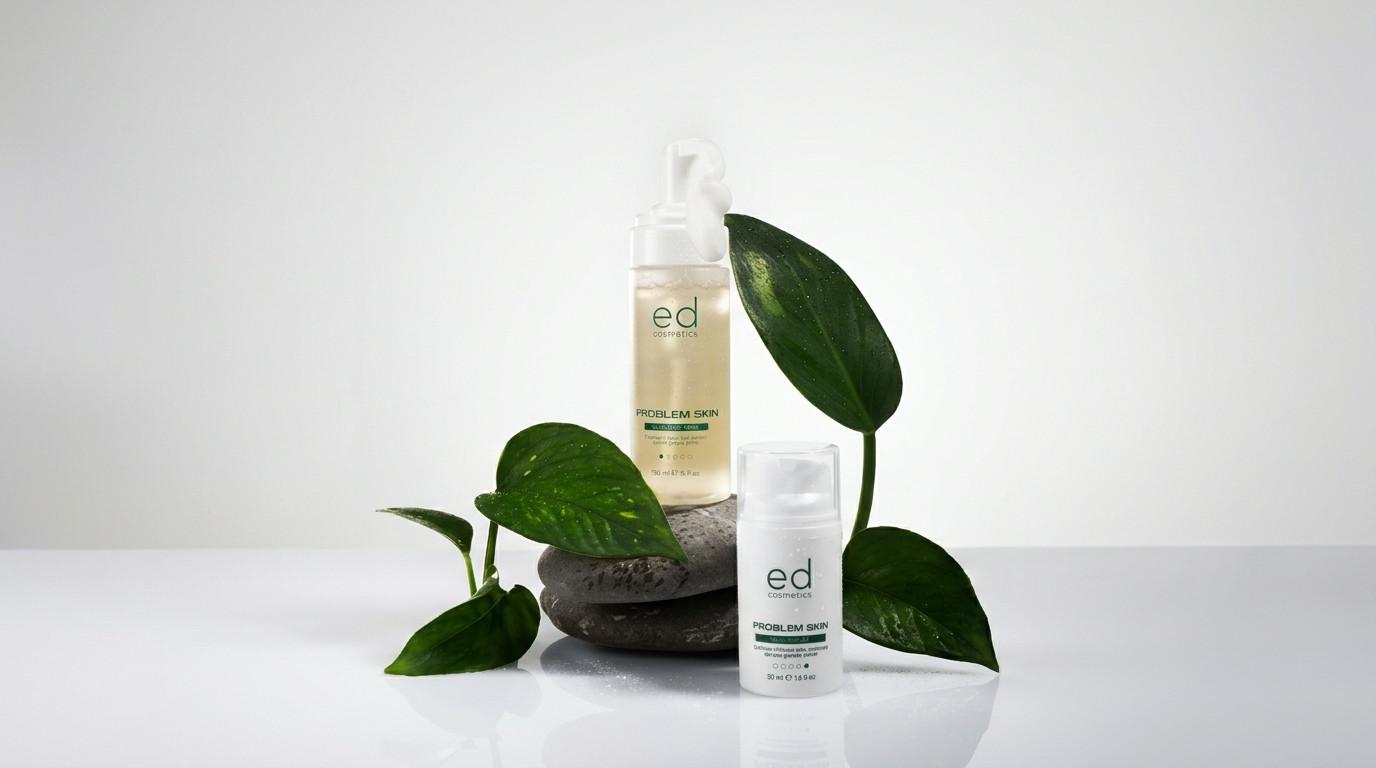
In the morning and evening, wash your face with Problem Skin Cleansing Foam by ED Cosmetics. It is specially formulated for people dealing with acne, excess sebum production, and enlarged pores. Boldo leaf extract, included in the formula, helps address skin imperfections and minimize the appearance of pores. The product has a lightweight, foamy texture that leaves the skin feeling fresh and smooth after daily use.
After cleansing, apply Problem Skin Face Cream by ED Cosmetics. Its formula is enriched with shea butter and boldo leaf extract. Regular use helps improve skin texture, enhances its overall appearance, and supports a healthy, radiant complexion. Use morning and evening.

Use sun protection all year round. ED Cosmetics Daily Sun Cream SPF 50 is enriched with vitamin E and edelweiss extract. Its lightweight texture absorbs quickly and does not leave a greasy film, making it suitable for everyday care of oily skin.
When Should You See a Dermatologist?
A home skincare routine is important for maintaining healthy-looking skin, but it cannot address severe inflammatory conditions on its own. If you regularly experience painful under-the-skin breakouts, deep inflammation, nodules, or cysts, you should consult a dermatologist. A specialist will assess your skin condition, determine the severity of your acne, and recommend an individual treatment plan.
Adjust your winter skincare routine to better meet your skin's needs. Combine the Problem Skin Cleansing Foam and Problem Skin Face Cream from ED Cosmetics. You can find both products on our website.
FAQ
1. Can you use a nourishing moisturizer on oily skin in winter?
Yes. Oily skin also needs hydration and nourishment, especially during the colder months. The key is to choose lightweight formulas that do not weigh down the skin or contribute to clogged pores. For example, Problem Skin Face Cream by ED Cosmetics, formulated with boldo leaf extract, helps minimize the appearance of pores and reduce excess shine.
2. Do you need sunscreen in winter when it is cloudy outside?
Do not skip sun protection during the colder months. Clouds do not block all ultraviolet radiation, including UVA rays, which can negatively affect our skin throughout the year. Use ED Cosmetics Daily Sun Cream SPF 50, enriched with vitamin E and edelweiss extract, which helps slow down the skin's photoaging process.
3. How many times a day should you wash your face if you have oily, acne-prone skin?
Twice a day — in the morning and evening. You should also wash your face after intense physical activity if your skin has become particularly sweaty. Cleansing more frequently will not make your skin less oily. Instead, it may increase dryness and irritation.
4. Why does oily skin start to flake in winter?
Low temperatures, wind, and dry air in heated indoor spaces contribute to moisture loss and weaken the skin's protective barrier. At the same time, the sebaceous glands continue producing sebum, so excess shine occurs alongside dryness and flaking. To support your skin, use gentle cleansers, such as Problem Skin Cleansing Foam by ED Cosmetics, and moisturize your face regularly.
5. Can you use scrubs if you have pimples and blackheads?
If you have active breakouts and inflammation, it is best to avoid scrubs with harsh abrasive particles. Mechanical friction can increase irritation and damage inflamed areas of the skin.