
AHA Acids in Autumn Skincare: How They Work and Which Products to Add to Your Beauty Routine
AHA acids are active ingredients at the heart of many skincare products. Their range of benefits is impressive: from brightening pigmentation and exfoliating dead skin cells to moisturizing the skin and visibly evening out the complexion.
The main types of AHA acids include:
- Citric acid – derived from citrus fruits; characterized by a low pH level.
- Glycolic acid – obtained from sugar cane, maple, and pineapple.
- Lactic acid – produced during the fermentation of products.
- Tartaric acid – found in acidic fruit juice.
- Malic acid – derived from berries and fruits such as apples, barberry, gooseberries, and raspberries.
How do AHA acids work, and which beauty products should you add to your autumn skincare routine to improve skin texture without overloading it? Let’s take a closer look.
Which AHA acid products should you add to your daily routine?
AHA acids affect our skin at all levels: tissue, cellular, and molecular. Cosmetics based on these substances are widely used to exfoliate dead skin cells: they weaken the bonds between the cells of the stratum corneum and accelerate their natural shedding process.
The AHA acid line by ED Cosmetics helps reduce pigmentation, minimize the appearance of wrinkles, moisturize the skin, and even out and improve the complexion. It also helps cleanse pores of open and closed comedones and reduce the appearance of post-acne scars.
Cleansing Foam with AHA Acids
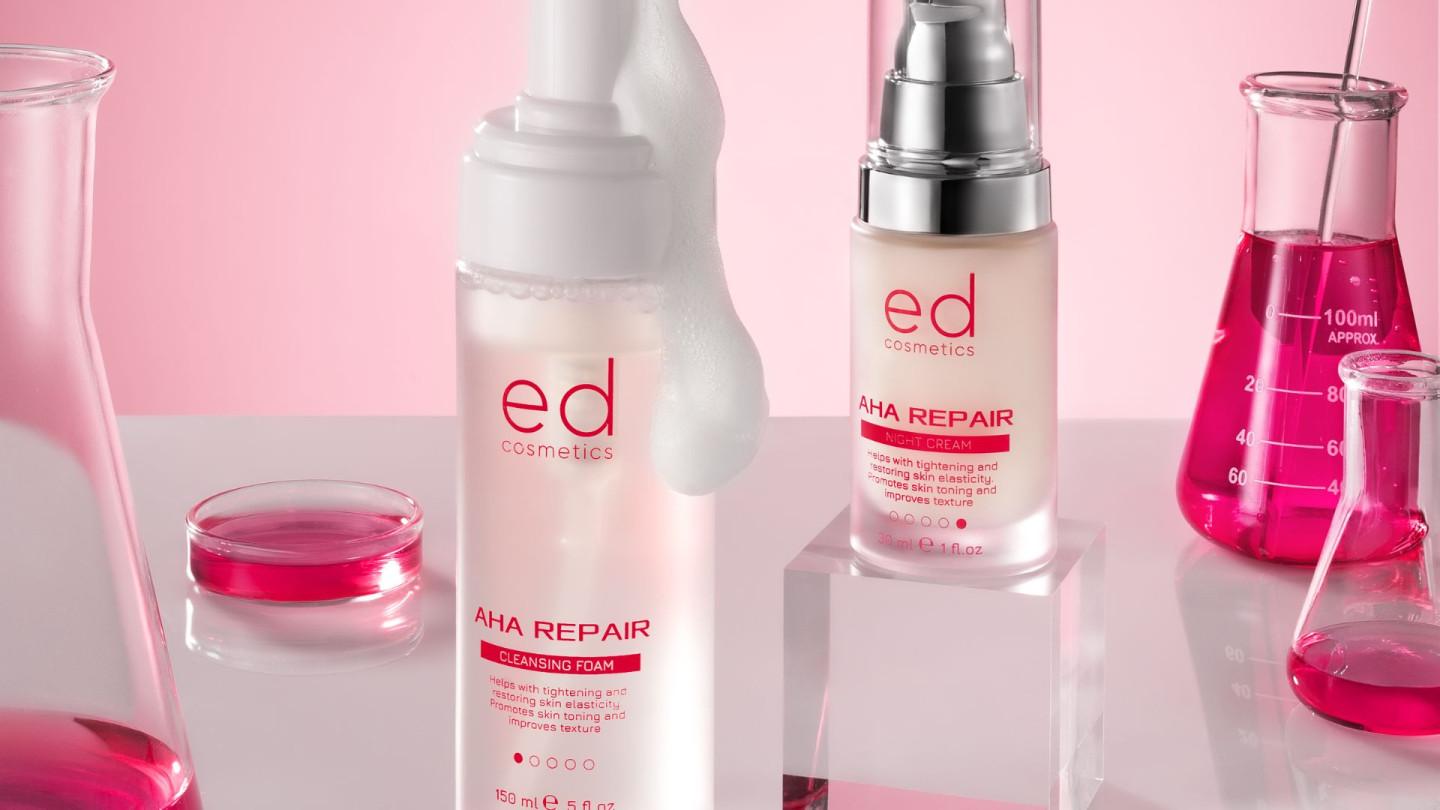
Integrate AHA acids into your autumn beauty routine by starting with skin cleansing. The AHA acid cleansing foam by ED Cosmetics removes impurities, cleanses pores, and supports the skin’s natural renewal processes. Its formula contains glycolic, malic, citric, tartaric, and lactic acids.
Apply the foam to damp skin, gently massaging it. Continue massaging with your fingertips to create a lather. Then rinse thoroughly with water. Regular use helps achieve a smoother skin texture, a radiant complexion, and better hydration.
Night Face Cream with AHA Acids
After thoroughly cleansing your skin, apply a night face cream containing glycolic acid and other AHA acids to support the skin’s natural renewal processes overnight. The product gently exfoliates, cleanses pores, and helps reduce imperfections. Over time, the skin texture becomes more even.
Apply the cream to cleansed facial skin. Gently massage until fully absorbed. Regular use improves elasticity, smooths the skin’s texture, and provides intensive hydration. Thanks to its gentle formula, it is suitable for daily use.

How to properly introduce acids into your daily skincare routine?
- Introduce acids gradually and monitor your skin’s reaction. If redness, burning, or discomfort occurs, reduce the frequency of use or take a break.
- Do not apply acids to irritated skin. First, give it time to recover, and only then return to acid-based skincare.
- More does not mean better. There is no need to use multiple acid-based products at the same time in the hope of achieving faster results. When using acids, moderation, consistency, and the correct order of application are more important.
- Do not neglect SPF. When using cosmetics with AHA acids, we recommend applying a sunscreen with SPF 30 or 50 during the day to protect the skin from UV radiation.
Although acids should be used with care, they can be some of our best allies in skincare. Follow the rules, and your skin will thank you. Discover the AHA Repair line by ED Cosmetics and introduce acids into your autumn skincare routine gradually, without overloading your skin.
FAQ
How do AHA acids affect our skin?
AHA acids exfoliate dead skin cells, even out the skin’s texture and tone, improve its appearance, and give the complexion a radiant glow. They also help reduce the appearance of pigmentation and wrinkles, moisturize the skin, cleanse pores of comedones, and make post-acne marks less noticeable.
Which AHA acids are most commonly used in cosmetics?
The most common AHA acids include glycolic, lactic, malic, citric, and tartaric acids. They differ in their properties and concentrations, so they can perform different functions in cosmetic formulas – from gentle exfoliation to improving the skin’s texture and appearance.
Can AHA acids be used in autumn?
Yes, autumn is one of the best times to introduce AHA acids into your skincare routine. During this season, the sun is less intense, so the skin is exposed to less intense UV radiation. However, daily sun protection is still essential.
Why should you apply SPF when using acids?
When using AHA acids, it is especially important to protect your skin from UV radiation. In the morning, apply a sunscreen with SPF 30–50 and reapply it throughout the day.
How often can products with AHA acids be used?
The frequency of use depends on the specific product, the concentration of acids, and your skin’s reaction. For example, the Night Face Cream with AHA Acids by ED Cosmetics has a gentle formula and is suitable for daily use. If you are using acid-based cosmetics for the first time, start with a lower frequency and gradually increase it if your skin responds comfortably. Also, avoid using multiple acid-based products at the same time.